Zero-Based Budgeting: Give Every Dollar a Job (Complete Guide)
Learn how zero-based budgeting works, why it's the most effective budgeting method, and how to implement it step-by-step to take control of every dollar you earn.
Zero-Based Budgeting: Give Every Dollar a Job (Complete Guide)
I’ll never forget the moment I realized I’d been “budgeting” wrong for years. It was a Tuesday night, staring at my bank account showing $847 less than I expected. Where did it go? I had no clue. I’d been using what I now call the “hope method” — hoping I’d have enough money at the end of the month. Spoiler: I never did.
Then I discovered zero-based budgeting, and within three months, I found an extra $640 per month I didn’t know I was wasting. Not by earning more. Not by living like a monk. Just by telling every single dollar where to go before it disappeared into the void.
If you’ve tried budgeting before and felt like it didn’t work, zero-based budgeting might be the system that finally clicks. Let me walk you through exactly how it works, why it’s different from other methods, and how to set it up in under 30 minutes.
What Is Zero-Based Budgeting?
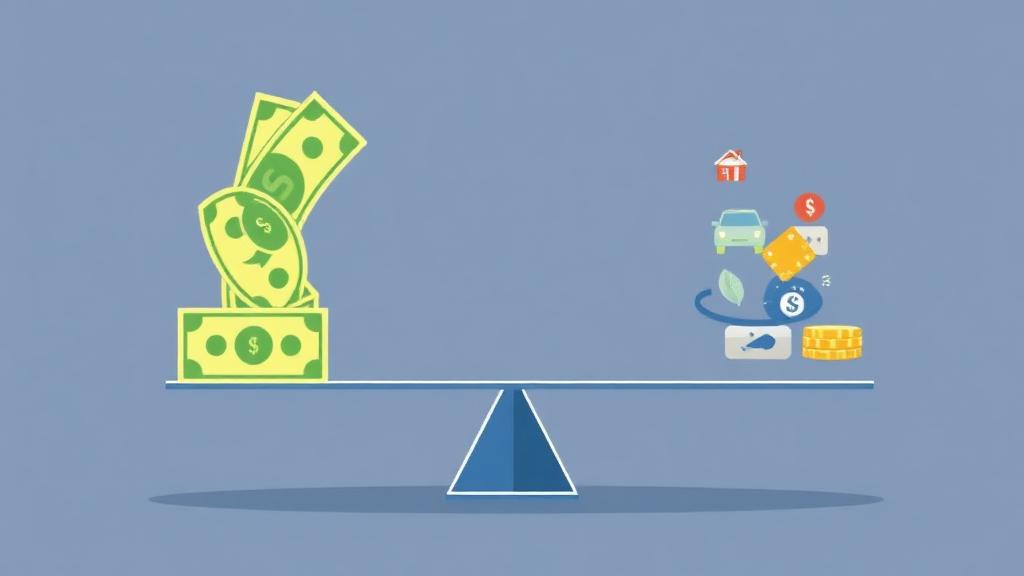
Zero-based budgeting (ZBB) is simple in concept: your income minus your expenses equals zero. Every dollar gets assigned a purpose — whether that’s rent, groceries, investing, or even fun money. Nothing is left unaccounted for.
Here’s the formula:
Total Monthly Income – All Planned Expenses = $0
This doesn’t mean you spend everything. It means you plan for everything. If you earn $4,500 after taxes, you need to assign all $4,500 to specific categories. Savings and investments count as “expenses” in this system.
The key difference from other budgeting methods? There’s no leftover money sitting in limbo, waiting to be impulse-spent. Every dollar has a job before the month even starts.
Zero-Based Budget vs. Other Budgeting Methods
I’ve tried nearly every budgeting approach out there. Here’s how they compare:
| Method | How It Works | Best For | Biggest Weakness |
|---|---|---|---|
| Zero-Based | Assign every dollar a job; income - expenses = $0 | Detail-oriented people who want full control | Requires more upfront time |
| 50/30/20 Rule | 50% needs, 30% wants, 20% savings | Beginners who want simplicity | Too vague for some; money still “leaks” |
| Envelope System | Cash in physical envelopes per category | Overspenders who need physical limits | Inconvenient in a digital world |
| Pay Yourself First | Save first, spend the rest | People who struggle to save | No structure for spending categories |
| 80/20 Budget | Save 20%, spend 80% however you want | People who hate detailed budgets | Easy to overspend within the 80% |
The 50/30/20 budget rule is a great starting point, but I found it left too much wiggle room. With zero-based budgeting, there’s nowhere to hide.
Why Zero-Based Budgeting Works So Well
1. It Eliminates the “Where Did My Money Go?” Problem
When I tracked my spending before ZBB, I’d find $200-400 every month in what I call “ghost spending” — small purchases I couldn’t even remember making. A coffee here, an Amazon impulse buy there, a random subscription I forgot about.
With ZBB, every dollar is pre-assigned. If it’s not in the budget, it doesn’t get spent. Simple.
2. It Forces You to Prioritize
When you have to account for every dollar, you’re forced to make conscious decisions. Do I really need that $15/month streaming service I watch once a quarter? Probably not. That’s $180/year that could go toward my emergency fund.
3. It Works on Any Income Level
Whether you make $30,000 or $300,000, the principle is the same. I’ve seen people on $2,800/month use ZBB to pay off $22,000 in debt in 18 months. The magic isn’t in how much you earn — it’s in how intentionally you direct what you have.
4. It Adapts Month to Month
December looks different from June. Back-to-school spending hits in August. Car insurance might be due quarterly. ZBB isn’t a “set and forget” template — you rebuild it each month based on that month’s reality.
How to Create Your Zero-Based Budget (Step-by-Step)
Step 1: Calculate Your Total Monthly Income
Start with every dollar coming in. This includes:
- Net paycheck(s) after taxes
- Side hustle income
- Freelance payments
- Investment dividends
- Any other regular income
Example: Let’s say your household brings in $5,200/month after taxes.
Pro Tip: If your income varies month to month, use your lowest earning month from the past three months as your baseline. Anything extra gets assigned to savings or debt payoff.
Step 2: List Every Expense Category
Here’s where most people go wrong — they forget categories. Use this master list as a starting point:
Fixed Expenses (Same Every Month):
- Rent/mortgage
- Car payment
- Insurance (health, auto, renters)
- Phone bill
- Internet
- Minimum debt payments
- Subscriptions (the ones you’re keeping)
Variable Expenses (Change Monthly):
- Groceries
- Gas/transportation
- Utilities (electricity, water, gas)
- Dining out
- Entertainment
- Personal care
- Clothing
- Household supplies
Financial Goals:
- Emergency fund contributions
- Retirement investing
- Extra debt payments
- Sinking funds (vacation, car repairs, gifts)
Don’t Forget:
- Annual expenses divided by 12 (Amazon Prime, car registration, etc.)
- Irregular expenses (haircuts, oil changes, vet visits)
- “Fun money” — yes, budget for fun!
Step 3: Assign Every Dollar
Now comes the actual zero-based part. Using our $5,200 example:
| Category | Amount |
|---|---|
| Rent | $1,400 |
| Groceries | $500 |
| Car Payment | $350 |
| Auto Insurance | $125 |
| Utilities | $180 |
| Gas | $150 |
| Phone | $85 |
| Internet | $65 |
| Health Insurance | $200 |
| Dining Out | $120 |
| Entertainment | $80 |
| Personal Care | $50 |
| Clothing | $60 |
| Household Supplies | $40 |
| Emergency Fund | $400 |
| Roth IRA | $500 |
| Extra Debt Payment | $300 |
| Sinking Fund (Car Repairs) | $100 |
| Sinking Fund (Vacation) | $150 |
| Sinking Fund (Gifts) | $75 |
| Fun Money | $100 |
| Miscellaneous | $70 |
| TOTAL | $5,200 |
Income ($5,200) minus expenses ($5,200) = $0. Every dollar has a job.
Step 4: Track Throughout the Month
This is where most budgets die. You can’t just set it and walk away. Check in at least twice a week to make sure you’re on track. I personally check every morning with my coffee — takes about 2 minutes.
If you’re looking for tools to help, check out our guide on the best free budgeting apps. I use a combination of YNAB (which was literally built for zero-based budgeting) and a simple spreadsheet.
Step 5: Adjust as Needed
Life happens. Your car breaks down. A friend invites you to a concert. The electric bill spikes in summer. When something changes, move money between categories — but always keep the total at zero. Taking $50 from dining out to cover a higher utility bill? Totally fine. That’s not failing — that’s budgeting.
Common Zero-Based Budgeting Mistakes (And How to Avoid Them)
Mistake #1: Not Budgeting for Irregular Expenses
This killed my first three attempts at ZBB. I’d forget about the $600 car insurance bill due in March or the $200 in birthday gifts throughout the year.
Fix: Create sinking funds. Divide annual/irregular expenses by 12 and save that amount monthly. $600 car insurance ÷ 12 = $50/month set aside.
Mistake #2: Making It Too Restrictive
I once budgeted $0 for entertainment and dining out. Lasted about 9 days before I rage-quit the entire budget. A budget that doesn’t include any fun is a budget you’ll abandon.
Fix: Always include a “fun money” category. Even $50-100/month prevents budget burnout.
Mistake #3: Forgetting to Budget for the Unexpected
Murphy’s Law loves budgets. Something unexpected will happen.
Fix: Include a “miscellaneous” or “buffer” category of $50-100. If you don’t use it, roll it into savings at month’s end.
Mistake #4: Not Adjusting for Different Months
December isn’t January. Summer utility bills aren’t winter ones.
Fix: Create your budget from scratch each month. It takes 20-30 minutes and prevents months of frustration.
Pro Tip: Do your monthly budget on the last day of the previous month. Set a calendar reminder. It takes the stress out of the first few days of a new month.
Real Results: What Zero-Based Budgeting Did for My Finances
Here’s my actual before-and-after over 6 months:
| Metric | Before ZBB | After 6 Months of ZBB |
|---|---|---|
| Monthly savings | $200-400 (inconsistent) | $850 (consistent) |
| “Mystery” spending | $300-500/month | Less than $50/month |
| Debt payoff speed | Minimum payments only | Extra $400/month toward debt |
| Financial stress (1-10) | 8 | 3 |
| Emergency fund | $1,200 | $6,300 |
The biggest surprise? I didn’t feel more restricted. I actually felt more free because I wasn’t constantly stressed about whether I could afford things. If it was in the budget, I spent it guilt-free.
Zero-Based Budgeting for Irregular Income
If you’re a freelancer, gig worker, or have commission-based pay, ZBB still works — it just needs a slight modification.
The Irregular Income ZBB Method:
- List all your expenses in priority order (rent first, fun money last)
- When money comes in, assign it to categories starting from the top
- If you run out of money before reaching the bottom, those categories wait until the next paycheck
- In high-earning months, fund your sinking funds and emergency fund aggressively
This approach saved me during my freelance years when income ranged from $2,800 to $7,200/month. I always knew exactly what to do with each payment the moment it hit my account.
If irregular income is making it hard to stop living paycheck to paycheck, ZBB gives you the framework to break that cycle even without consistent paychecks.
Tools for Zero-Based Budgeting
Digital Options:
- YNAB (You Need a Budget): Built specifically for ZBB. $14.99/month but worth every penny. It syncs with bank accounts, tracks overspending in real-time, and forces you to assign every dollar. This is what I use.
- EveryDollar: Free version available. Dave Ramsey’s ZBB app. Simple interface, great for beginners. The paid version ($17.99/month) syncs with bank accounts.
- Google Sheets/Excel: Free and fully customizable. No bank syncing, but total control over your layout and categories. Perfect for privacy-conscious folks.
- Goodbudget: Digital envelope system that works well for ZBB. Free version allows 10 envelopes — usually enough to get started.
Analog Options:
- Budget binder with printed worksheets — Surprisingly popular and effective. Something about physically writing numbers creates accountability.
- Notebook and pen (yes, this still works!) — My grandmother managed a household of 6 with a spiral notebook and never missed a payment.
- Cash envelope system paired with ZBB categories — Physical cash in labeled envelopes. When the envelope is empty, spending stops. Period.
My Recommended Starter Setup:
If you’re new to ZBB, start with a free Google Sheet for 1-2 months. Get comfortable with the method before paying for an app. Once you’re committed, upgrade to YNAB — the automation and bank syncing save hours monthly and are worth the investment.
Zero-Based Budgeting for Families
ZBB works differently when multiple people are involved. Here’s what I’ve learned from budgeting with a partner:
The Monthly Budget Meeting: Schedule 20-30 minutes together on the last day of each month. Both partners must be present and engaged. This isn’t one person dictating — it’s collaborative planning.
Individual “No Questions Asked” Money: Each person gets a personal spending category that requires zero justification. My partner and I each have $100/month we can spend on literally anything without discussion. This prevents resentment and gives both people financial autonomy within the system.
Kids and ZBB: If you have kids, zero-based budgeting is actually a fantastic teaching tool. Involve them in age-appropriate ways:
- Ages 5-8: Let them help categorize spending (“is this a need or a want?”)
- Ages 9-12: Give them their own mini zero-based budget for allowance
- Ages 13+: Include them in the family budget meeting for relevant categories (clothing, activities, school expenses)
How to Start This Week
You don’t need to wait until the first of the month. Here’s your quick-start plan:
- Today: Calculate your monthly income and list all expenses
- Tomorrow: Assign every dollar to a category until you hit zero
- This week: Track every purchase against your budget
- End of week: Review and adjust categories if needed
- End of month: Celebrate your wins and plan next month
If you’re looking for a faster financial win to build momentum, try our how to save $1,000 in 30 days challenge alongside your new ZBB system.
Frequently Asked Questions
What if my expenses don’t equal my income exactly?
They need to. If you have $200 “left over” after assigning all categories, that $200 needs a job — put it toward your emergency fund, investing, or extra debt payment. If you’re $200 short, you need to cut categories until the math works. This forced balancing is what makes ZBB so powerful.
Is zero-based budgeting good for couples?
Absolutely — and I’d argue it’s especially good for couples because it forces money conversations. My partner and I do a monthly “budget date” where we plan the next month together. It’s eliminated about 90% of our money arguments because we agree on the plan upfront.
How long does zero-based budgeting take each month?
The initial setup takes 1-2 hours as you figure out your categories and amounts. After that, planning each month takes 20-30 minutes, and daily tracking takes 2-5 minutes. That’s roughly 2-3 hours per month total to manage your entire financial life.
Can I use zero-based budgeting if I have debt?
Yes! ZBB is one of the best systems for debt payoff because it forces you to decide exactly how much goes to debt each month. Combine it with the debt snowball or avalanche method for maximum impact.
What’s the difference between zero-based budgeting and the envelope system?
The envelope system uses physical cash divided into categories. Zero-based budgeting is the philosophy of assigning every dollar a job — you can use envelopes, apps, spreadsheets, or any tool. Many people combine both: ZBB as the method, envelopes (digital or physical) as the tool.
The Bottom Line
Zero-based budgeting isn’t just another budgeting method — it’s a complete shift in how you relate to money. Instead of wondering where your money went, you’re telling it where to go. Instead of hoping you’ll have enough, you’re knowing you will.
The first month will feel tedious. The second month will feel empowering. By the third month, you’ll wonder how you ever managed money without it.
Start today. Open a spreadsheet, list your income at the top, and don’t stop assigning until you hit zero. Your future self will thank you.
Ready to take this further? Combine zero-based budgeting with our guide to automating your finances so your money flows to the right places without any effort. Or explore frugal living tips to find even more dollars to assign.